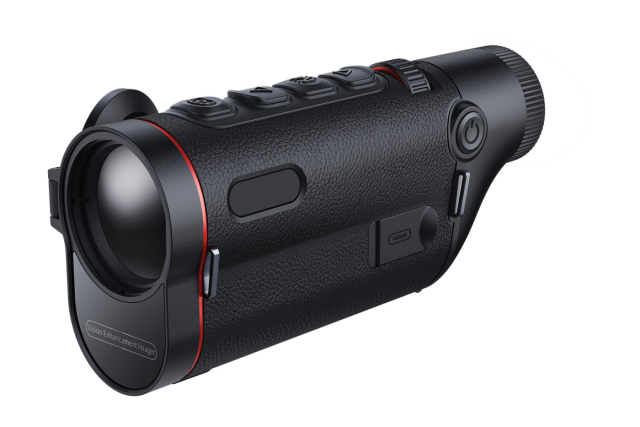
Guide TD435S is a handheld thermal monocular combining a 400 × 300 sensor and 35 mm lens with substantial magnification and long battery life.
Thermal imaging when daylight fades
The thermal sensor detects temperature differences, making animals and other heat sources visible without daylight. Its 400×300 px sensor and 35 mm lens determine this model’s field of view and level of image detail. Magnification is 3.26–13.04x: use the lower end for an overview and higher magnification to examine a smaller area more closely.
Image quality and practical features
The built-in display (0.49″ AMOLED 1440×1080) presents the thermal image through the eyepiece. Different colour palettes let you choose how warmer and colder areas appear, such as light or dark. This allows you to adjust the presentation to the surroundings and your viewing preferences.
Designed for outdoor use
The symmetrical housing and focusing roller are designed for either hand. You can adjust focus with one finger without changing your grip. A replaceable 18650 battery provides up to 10 hours of operation, while IP67 protection helps keep dust and water out. Swapping batteries offers an alternative to ending your observation session to recharge.
Record your observations
Photo and video functions let you keep a record of what you discover rather than just viewing it live. Wi-Fi connectivity allows connection to a compatible mobile app for viewing and managing recordings. This is useful for documenting repeated observations or sharing an outdoor experience with someone else.
Technical specifications
- Thermal sensor: 400×300 @ 12 µm
- Thermal sensitivity (NETD): 15 mK
- Objective diameter: 35 mm
- Magnification: 3.26–13.04x
- Display: 0.49″ AMOLED 1440×1080
- Weight: 355 g
- Length: 159 mm
- Width: 54 mm
- Height: 74 mm
- Eye relief: 20 mm
- Protection rating: IP67
- Frame rate: 50 Hz
- Battery life, up to: 10 h
- Detection distance, up to: 1800 m
Understanding range and thermal imaging
A stated detection distance describes spotting a heat source under favourable conditions, not reliably identifying an animal at that distance. Weather, temperature contrast, object size and a clear line of sight affect the result. Thermal imaging does not see through glass, vegetation or other solid obstructions.