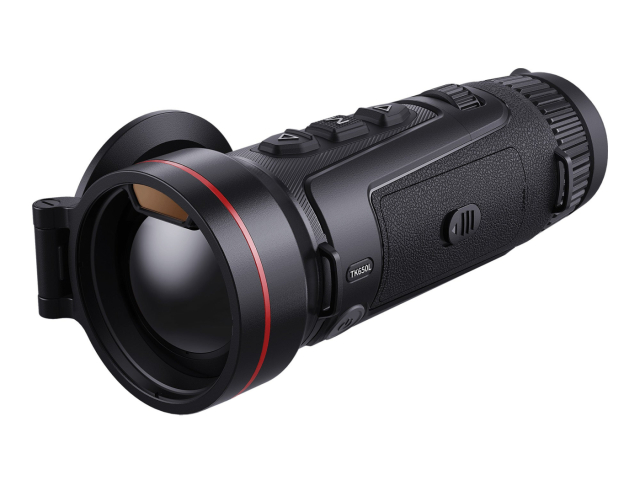
Guide Kodiak 3.0 TK650L is a Kodiak 3.0 monocular with a 50 mm lens and 4× initial magnification for longer-distance observation with a large, detailed display.
Thermal imaging when daylight fades
The thermal sensor detects temperature differences, making animals and other heat sources visible without daylight. Its 640×512 px sensor and 50 mm lens determine this model’s field of view and level of image detail. Magnification is 4-32x: use the lower end for an overview and higher magnification to examine a smaller area more closely.
Image quality and practical features
The built-in display (1,03″ AMOLED 2560x2560) presents the thermal image through the eyepiece. Different colour palettes let you choose how warmer and colder areas appear, such as light or dark. This allows you to adjust the presentation to the surroundings and your viewing preferences.
The integrated laser rangefinder measures up to 1200 m. This lets you view the thermal image and check the distance to an object with the same device, for example across a field or to a landscape feature. Measuring range depends on factors including the object’s surface and surrounding conditions.
Designed for outdoor use
The focusing wheel can be operated with one hand, and the symmetrical housing suits either hand. Two supplied batteries provide up to 5.5 hours each, giving up to 11 hours in total with a battery change. USB-C charging and IP67 protection support longer outdoor trips.
Record your observations
Photo and video functions let you save observations and revisit them later. This is useful for documenting animals returning to the same place, comparing different trips or sharing a wildlife encounter with someone else.
Technical specifications
- Thermal sensor: 640×512@12 µm
- Thermal sensitivity (NETD): 15 mK
- Objective diameter: 50 mm
- Magnification: 4-32x
- Display: 1,03″ AMOLED 2560x2560
- Weight: 593 g
- Length: 191 mm
- Width: 79 mm
- Height: 67 mm
- Eye relief: 30 mm
- Protection rating: IP67
- Frame rate: 50 Hz
- Laser ranging, up to: 1200 m
- Detection distance, up to: 2600 m
Understanding range and thermal imaging
A stated detection distance describes spotting a heat source under favourable conditions, not reliably identifying an animal at that distance. Weather, temperature contrast, object size and a clear line of sight affect the result. Thermal imaging does not see through glass, vegetation or other solid obstructions.